
WELCOME BONUS 300%
UP TO €2000 + 100
FREE SPINS
UP TO €2000 + 100
FREE SPINS
Home → Games
Casino games at Asino Casino
Corner Pays 8:1, Dozen Only 2:1
American Roulette offers a Straight payout of 35:1 alongside the Corner bet paying 8:1, which requires covering four adjacent numbers on the grid. This specific return structure applies to the 38-sector wheel featuring both single and double zeros. The presence of these two green pockets increases the house edge to 5.26%, significantly higher than European variants. Consequently, players face a steeper mathematical disadvantage when placing bets on this specific table configuration.
Dozen bets in American Roulette pay 2:1, providing a lower return compared to the Straight wager's 35:1 odds. These wagers cover twelve numbers but still suffer from the same 5.26% house edge inherent to the double-zero layout. Unlike the French version, La Partage rules do not apply here, meaning losses are fully retained by the casino. Players betting on dozens must accept this fixed statistical disadvantage without any reduction mechanisms for even-money losses.
The Column bet also pays 2:1 in American Roulette, mirroring the return structure of the dozen wares. However, all these outside bets share the identical 5.26% house advantage due to the extra zero pocket. This edge is double that of the European wheel, making long-term profitability nearly impossible for casual gamblers. The difference between a 2:1 column return and a 35:1 straight win highlights the variance risk in this game.
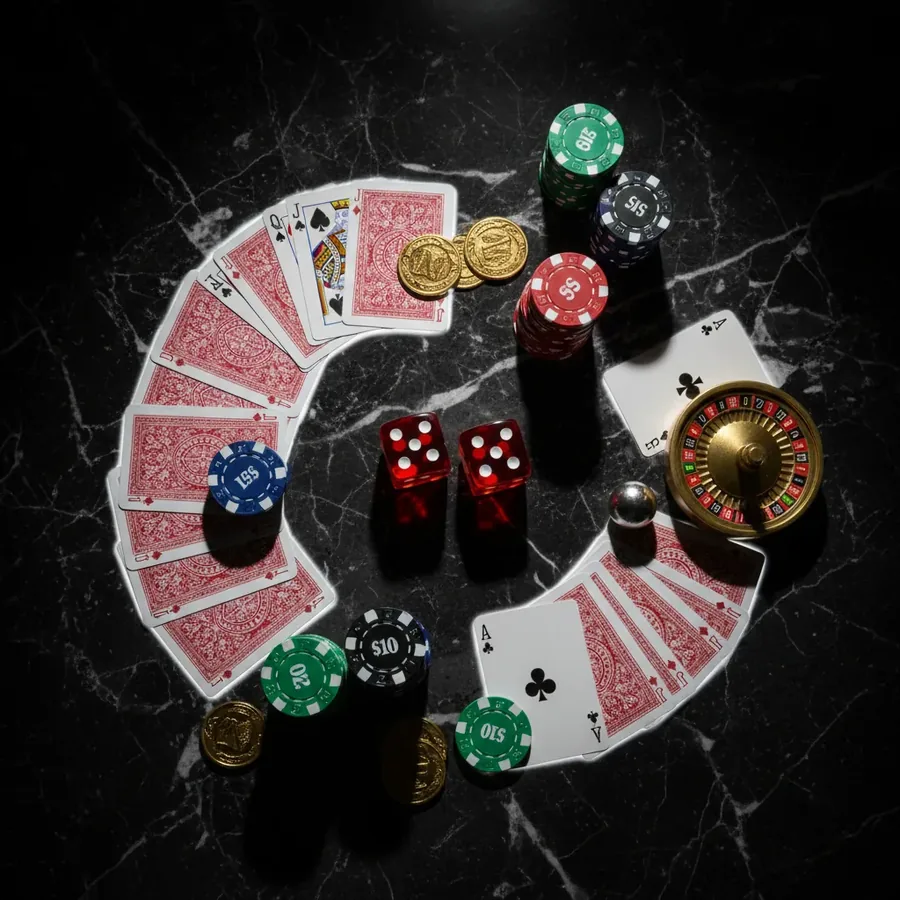
Straight, Split, and Corner: Three Terms Briefly Explained
A Straight bet in Roulette covers a single number and pays 35:1, offering the highest possible return on a single chip. In American Roulette, this wager faces a 5.26% house edge because of the additional double-zero pocket on the wheel. This edge is exactly double that of the European wheel, which only has one zero and thus a 2.70% advantage. Players choosing this high-risk option must account for the significant statistical disadvantage built into every spin outcome.
The Split bet allows players to wager on two adjacent numbers, paying out at 17:1 if either number wins. This option reduces volatility slightly compared to the Straight bet but maintains the same 5.26% house edge in American versions. The payout ratio reflects the 1-in-38 probability of winning on the specific wheel layout used at Asino Casino. Understanding this ratio helps players manage their bankroll more effectively across multiple spins on the table.
A Corner bet covers four numbers forming a square on the layout and pays 8:1 upon a successful hit. This wager sits between the high-risk Straight and low-risk Outside bets in terms of potential return and frequency. Like all bets on the American wheel, it suffers from the inflated 5.26% house edge caused by the double zero. The 8:1 payout remains consistent regardless of whether the player uses American or European roulette rulesets.
When is Splitting Aces and Eights Sensible?
Splitting Aces in Blackjack allows players to create two new hands, each starting with an Ace, improving overall expected value. Resplitting Aces improves the RTP by approximately 0.08 percentage points compared to games that forbid this action. However, most casinos limit subsequent cards drawn to just one per hand, which restricts further doubling opportunities. This rule modifier is crucial for maintaining optimal strategy against dealers standing on soft seventeen.
Splitting Eights is generally recommended to avoid holding a hard sixteen, which is statistically the worst starting hand in Blackjack. The base strategy for six-deck games with dealer standing on soft seventeen mandates splitting eights in almost all scenarios. This decision reduces the house edge from roughly 14% to under 1% when played correctly by basic standards. Deviating from this advice significantly increases the likelihood of losing the total wagered amount over time.
The availability of Double After Split (DAS) affects the value of splitting pairs like Eights and Fours in blackjack. DAS improves the RTP by approximately 0.14 percentage points, making split hands more profitable in the long run. Games without DAS offer a slightly higher house edge, penalizing players who cannot capitalize on favorable two-card totals. Comparing these rule sets reveals why table selection directly impacts the mathematical expectation of every split decision made.
Connection Lost in Table Game: Round Continues Automatically
Live dealer tables operate via continuous video streams where rounds proceed independently of individual player connection stability. If a connection drops during a bet placement, the system typically records the wager based on the last confirmed state before disconnection. This mechanism ensures that the live stream and dealer actions continue without interruption for other participants at the table. The integrity of the game round remains intact despite temporary technical issues affecting specific user endpoints.
Reconnection protocols allow players to resume viewing the feed once connectivity is restored, though active bets remain bound by previous decisions. Any winnings from a resolved round are credited automatically to the account balance after the round concludes successfully. This automated process eliminates manual intervention requirements for standard gameplay interruptions encountered during live streaming sessions. Players should verify their bonus eligibility, as Tischspiele contribute only 10% toward the 300% welcome bonus turnover requirement.
Technical failures do not alter the fundamental mathematics of games like Blackjack or Roulette played through live interfaces. The house edge, such as the 5.26% in American Roulette or 0.46% in specific Blackjack variants, remains constant regardless of connection quality. Automated systems handle dispute resolution based on server logs rather than visual confirmation from the client side. This approach prioritizes game flow continuity while maintaining strict adherence to the established rules of play.
Video Poker 9/6: What the Two Numbers Mean
The term 9/6 in Video Poker refers to the payout schedule for Full House and Flush respectively, indicating nine coins for a Full House and six for a Flush. This specific paytable yields an impressive RTP of 99.54% when playing with maximum five coins wagered per hand. The Royal Flush pays 800 coins for one coin but jumps to 4000 coins for the maximum five-coin bet. This structure creates a positive expected value scenario only achievable with perfect strategy and max bets.
Game categories at a glance
| Category | Examples | Stakes From | Highlight |
|---|---|---|---|
| Slots | Nitropolis 4, Rise of Olympus, Thunderstruck II | 0,10 EUR | thousands of titles |
| Table games | Roulette, Blackjack, Baccarat | 0,50 EUR | classic rules |
| Live casino | Quantum Roulette Live, Mega Fire Blaze Roulette Live | 0,20 EUR | real dealers |
| Jackpot games | Mega Moolah, Divine Fortune, Age of the Gods | 0,20 EUR | progressive pools |
| Instant games | Aviator, Plinko, Mines | 0,10 EUR | fast rounds |
| Video poker | Jacks or Better, Deuces Wild | 0,25 EUR | strategy based |
Split 17:1 and Corner 8:1 in Payout Comparison
The Straight bet on American Roulette offers a payout of 35 to 1, while the Split wager pays 17 to 1. The Corner bet provides an even lower return at 8 to 1, reflecting the higher difficulty of hitting four specific numbers simultaneously. This structure applies across both European and French variants where these standard payout ratios remain consistent regardless of the wheel layout.
American Roulette features 38 sectors including double zero, resulting in a house edge of 5.26 percent for all bets. In contrast, European Roulette has only 37 sectors with a single zero, reducing the house advantage to exactly 2.70 percent. The difference in edge directly impacts long-term returns, making the European version statistically superior for players seeking better value over extended sessions.
The Dozen bet and Column bet both pay 2 to 1 in European Roulette, covering twelve numbers each. These outside wagers offer frequent wins but maintain the same 2.70 percent house edge as internal bets like the Straight. Players often prefer these for bankroll management due to their higher hit frequency compared to riskier corner or split positions.
Game Shows: sectors, multipliers, and bet ranges
Sic Bo Small bets cover sums from 4 to 10 and pay 1 to 1 under Atlantic City rules. This option serves as one of the best available wagers in the game, carrying a house edge of only 2.78 percent. Players must avoid Triple combinations, which cause this specific bet to lose regardless of the total sum achieved during the round.
Video Poker Jacks or Better 9/6 tables provide a Full House payout of 9 coins and a Flush payout of 6 coins per wager. This full pay table yields a remarkable RTP of 99.54 percent when optimal strategy is applied consistently. Deviating from perfect play quickly erodes this advantage, potentially dropping the return significantly below the theoretical maximum for casual users.
Baccarat Player Pair side bets pay 11 for 1 when the first two cards form a matching pair. However, this auxiliary wager carries a steep house edge of 10.36 percent based on eight-deck shoes. The edge is substantially higher than the main game, making it a poor choice for strategic players focused on minimizing losses over time.
Splitting in Blackjack: one hand becomes two
Resplitting Aces improves the player's expected return by approximately 0.08 percentage points in six-deck games. This rule allows players to separate paired Aces again if another Ace appears, creating additional opportunities to win. Such modifications slightly shift the balance toward the gambler compared to stricter variations that forbid subsequent splits after an initial separation.
Double After Split (DAS) enhances the player's position by improving the return by roughly 0.14 percentage points. This permission enables doubling down on any card received after splitting pairs, adding valuable strategic flexibility during play. Without DAS, players lose this crucial option, forcing them to stand or hit in situations where doubling would be mathematically optimal.
Insurance bets pay 2 to 1 when the dealer shows an Ace, acting as a hedge against potential blackjacks. Despite appearing protective, this side bet carries a house edge of 7.47 percent in six to eight deck games. Basic strategy dictates always rejecting insurance unless counting cards reveals a true count of plus three or higher.
Late Surrender allows players to forfeit half their bet after the dealer checks for blackjack, reducing the house edge by 0.08 percentage points. This rule provides a safety net for weak hands against strong dealer upcards, effectively saving money over thousands of hands. Early surrender is more valuable but rarely offered in modern online casino environments.
Soft 17: the Ace counts 11 or 1
When the dealer hits on Soft 17, the house edge increases by 0.22 percentage points compared to standing rules. This single rule change forces the dealer to draw another card when holding an Ace valued at eleven, increasing bust probability slightly. Players benefit from games where the dealer stands on all seventeen totals to maintain optimal statistical advantage.
Six-deck games with Soft 17 standing, Double After Split, and Resplit Aces yield a house edge of just 0.46 percent. This configuration represents a favorable environment for skilled players adhering strictly to basic strategy charts. Each rule modifier contributes incrementally, with DAS providing the largest single improvement among standard table variations.
Blackjack paying 3 to 2 instead of 6 to 5 saves the player significant money over time. Switching to 6 to 5 payouts adds exactly 1.39 percentage points to the house edge, drastically worsening conditions. A ten-dollar bet returns twelve euros under 6 to 5 rules rather than fifteen, illustrating the direct financial impact of payout structures.
9/6 table: nine for Full House, six for Flush
Video Poker Jacks or Better 9/6 tables deliver a Royal Flush payout of 800 coins for five-coin wagers. This maximum stake unlocks a bonus of 4000 coins, essential for achieving the advertised 99.54 percent return rate. Smaller bets reduce the effective return because the top prize remains fixed while the investment scales down proportionally.
Reducing payouts to 8/5 drops the RTP to 97.29 percent, costing 2.25 percentage points relative to the full pay version. This reduction highlights how sensitive video poker returns are to minor changes in the paytable structure. Players seeking higher returns must verify the exact Full House and Flush multipliers before sitting down at any machine.
Deuces Wild Full Pay tables offer an RTP exceeding 100 percent at 100.76 percent with perfect strategy. All twos act as wild cards, enabling Five of a Kind hands that pay 15 coins for natural Royals worth 800. This positive expectation exists only when betting maximum coins and executing flawless decision-making without deviation.
Craps Free Odds bets carry a house edge of zero percent, paying according to true mathematical probabilities. Combined with Pass Line wagers using 3-4-5x odds limits, the overall house advantage drops to 0.37 percent. This unique feature makes Craps one of the fairest games available, provided players understand the complex betting structure required to access free odds.
Baccarat in three steps: bet, reveal, compare
The Player Pair side bet in an eight-deck Baccarat shoe carries a house edge of 10.36%. This figure is significantly higher than the main game's theoretical return, making it a high-risk proposition for bankroll management. That 10.36% edge means the casino retains more money from this specific wager than from standard table bets.
Payouts for a successful Player Pair prediction are listed at 11:1, which translates to 10 units profit for every unit wagered. While this payout looks attractive compared to even-money outcomes, the underlying mathematics favor the dealer heavily. Players should note that this side bet relies entirely on the first two cards forming a matching rank.
Eligibility for bonus turnover calculation excludes this high-edge side bet entirely, as Tischspiele contribute only 10% to wagering requirements. In contrast, Slots count at 100%, allowing players to clear the 300% welcome bonus up to €2,000 much faster. Relying on Baccarat side bets to meet the turnover target would require ten times the initial deposit amount.
37 vs. 38 Sectors: One Zero Difference
European Roulette utilizes a wheel with 37 sectors, resulting in a consistent house edge of 2.70% across all betting options. This single-zero layout offers a Return to Player (RTP) of 97.30%, which is the mathematical baseline for fair European wheels. The constant edge applies regardless of whether one bets on Red/Black or individual numbers like Straight 35:1.
American Roulette introduces a second zero, expanding the wheel to 38 sectors and doubling the casino's advantage to 5.26%. This additional sector reduces the RTP to 94.74%, effectively halving the player's expected return over time. The payout structure remains identical at Straight 35:1, but the probability of winning decreases significantly due to the extra pocket.
The difference between these two layouts amounts to a 2.56 percentage point gap in the house edge, directly impacting long-term profitability. A player choosing the American variant loses capital at more than twice the rate of the European version. Strategic selection of the 37-sector wheel is essential for minimizing the mathematical disadvantage inherent in the game.
Plein Pays 35:1, Cheval Pays 17:1
A Plein bet on a single number in European Roulette pays 35:1, offering the highest potential payout on the table. This payout corresponds to a 1-in-37 probability, establishing the fundamental risk-reward ratio for inside bets. The house maintains its 2.70% edge uniformly, regardless of the specific number selected by the player.
Cheval wagers cover two adjacent numbers and pay out at 17:1 when either chosen slot wins. This option doubles the coverage area compared to a Plein bet while halving the payout multiplier relative to the risk. The mathematical expectation remains tied to the 2.70% house edge, ensuring consistency across different bet types.
Corner bets covering four numbers pay 8:1, providing a middle ground between high-risk singles and low-risk outside bets. Dozen bets pay 2:1, covering nearly one-third of the wheel with a similar house advantage. Understanding these payout structures helps players manage volatility while acknowledging that no strategy can overcome the built-in 2.70% disadvantage.
Four Blackjack Hand Decisions at a Glance
Players must choose between hitting, standing, doubling down, or splitting pairs based on their hand and the dealer's upcard. In a 6-deck game with S17, DAS, and DOA rules, the optimal strategy yields an RTP of 99.54%. Deviating from this basis strategy increases the house edge, reducing the player's long-term returns.
Splitting allows players to divide a pair into two separate hands, potentially doubling their chances of winning if the deck composition favors it. Resplitting Aces is often restricted to one card per hand, limiting the strategic depth of this move. Allowing double after split improves the RTP by approximately 0.14 percentage points compared to restrictive rules.
Surrender options, specifically late surrender, can reduce the house edge by 0.08 percentage points if used correctly. This rule permits players to forfeit half their bet after the dealer checks for blackjack, mitigating losses on weak hands against strong dealers. Early surrender is far more valuable but extremely rare in modern online implementations.
Before Double Down: read the open dealer card
Doubling down involves increasing the initial bet by exactly 50% in exchange for receiving only one additional card. This aggressive move is permitted on any two-card total in games offering Double After Split (DAS). The decision hinges on the dealer's visible upcard, which dictates the probability of busting or achieving a strong final hand.
If the dealer shows a weak card like a 4, 5, or 6, doubling down becomes highly favorable due to the high likelihood of the dealer busting. Conversely, doubling against a strong upcard such as an Ace or 10 requires precise card counting knowledge to justify the increased risk. Basic strategy dictates specific scenarios where the expected value turns positive for the player.
Insurance bets, offered when the dealer shows an Ace, carry a steep house edge of 7.47% for standard play. This side bet pays 2:1 but is mathematically inferior unless the player counts cards and the true count reaches +3. For most players, rejecting insurance is the only profitable choice, preserving the 0.46% house edge of the main game.
Contact
Live - online chat
Banking




Providers







Asino Casino 2026